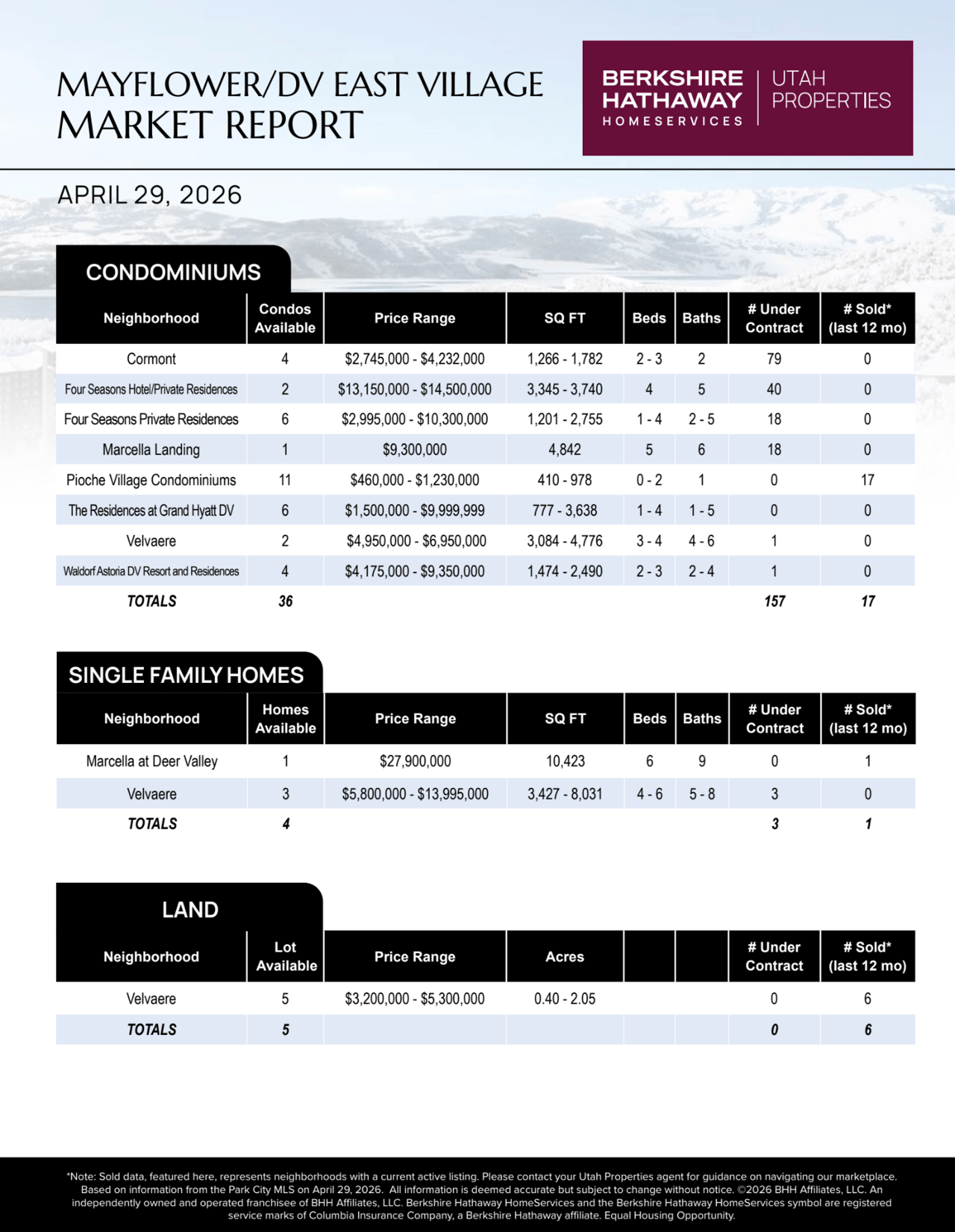
What the Latest Park City and Deer Valley Real Estate Reports Tell Us
There is something about real estate data that feels both useful and slightly dangerous. Useful, because numbers help cut through the noise. Dangerous, because numbers without context can easily lead people to the wrong conclusion.
That is especially true in Park City and Deer Valley.
Our market does not behave like a typical suburban housing market. It is influenced by lifestyle buyers, second-home ownership, limited inventory, resort expansion, interest rates, wealth migration, and the emotional pull of owning property in the mountains. A single statistic rarely tells the whole story.
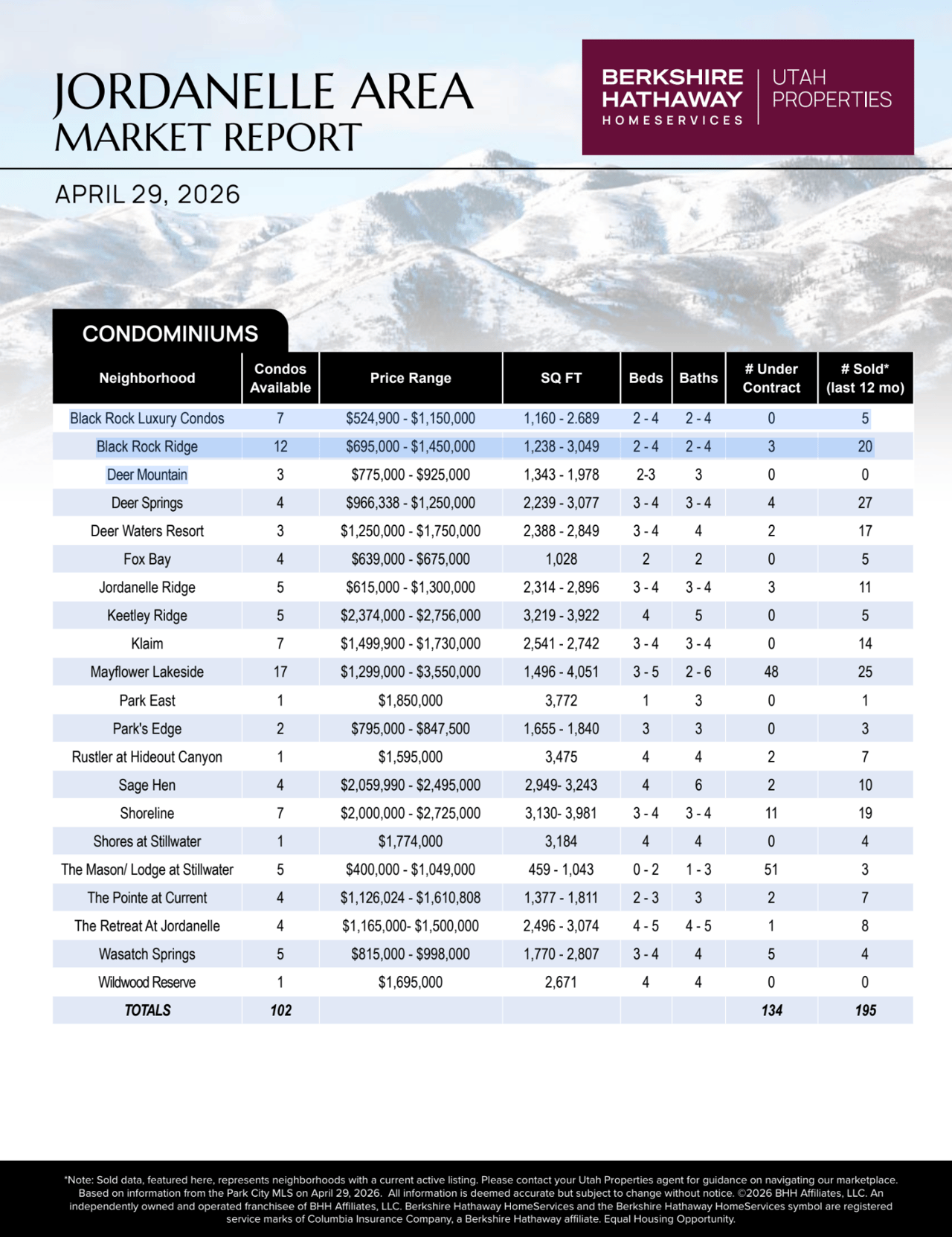
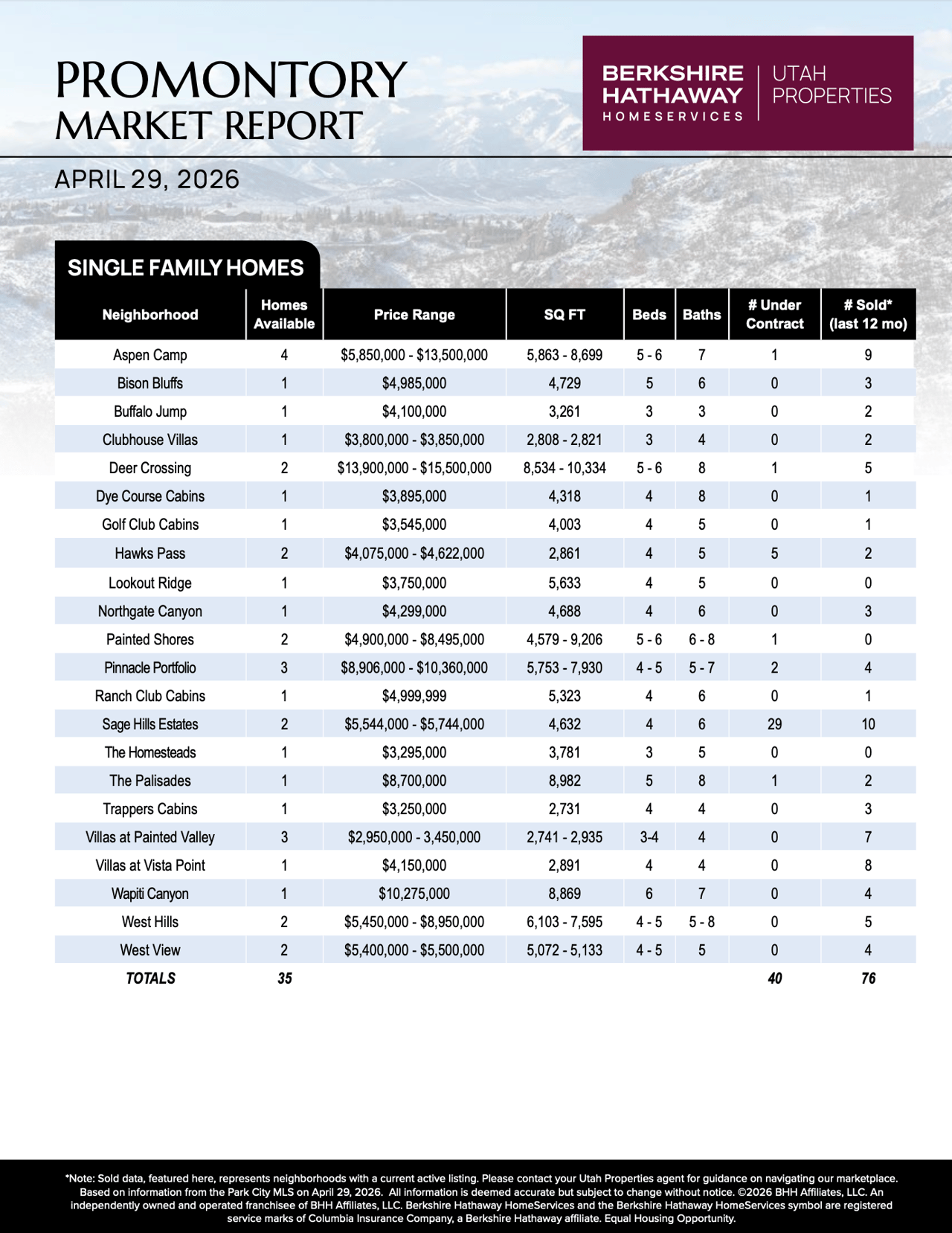
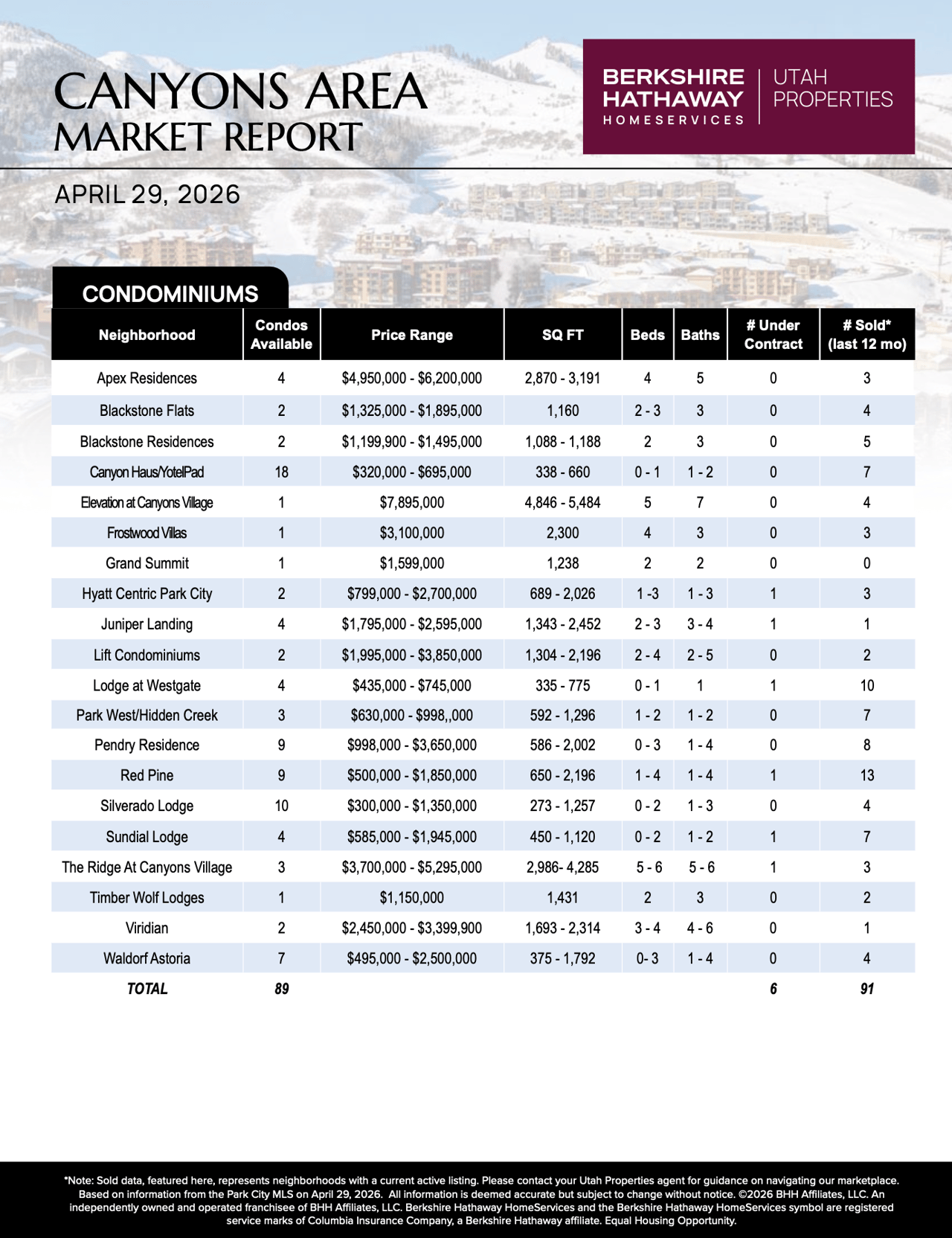
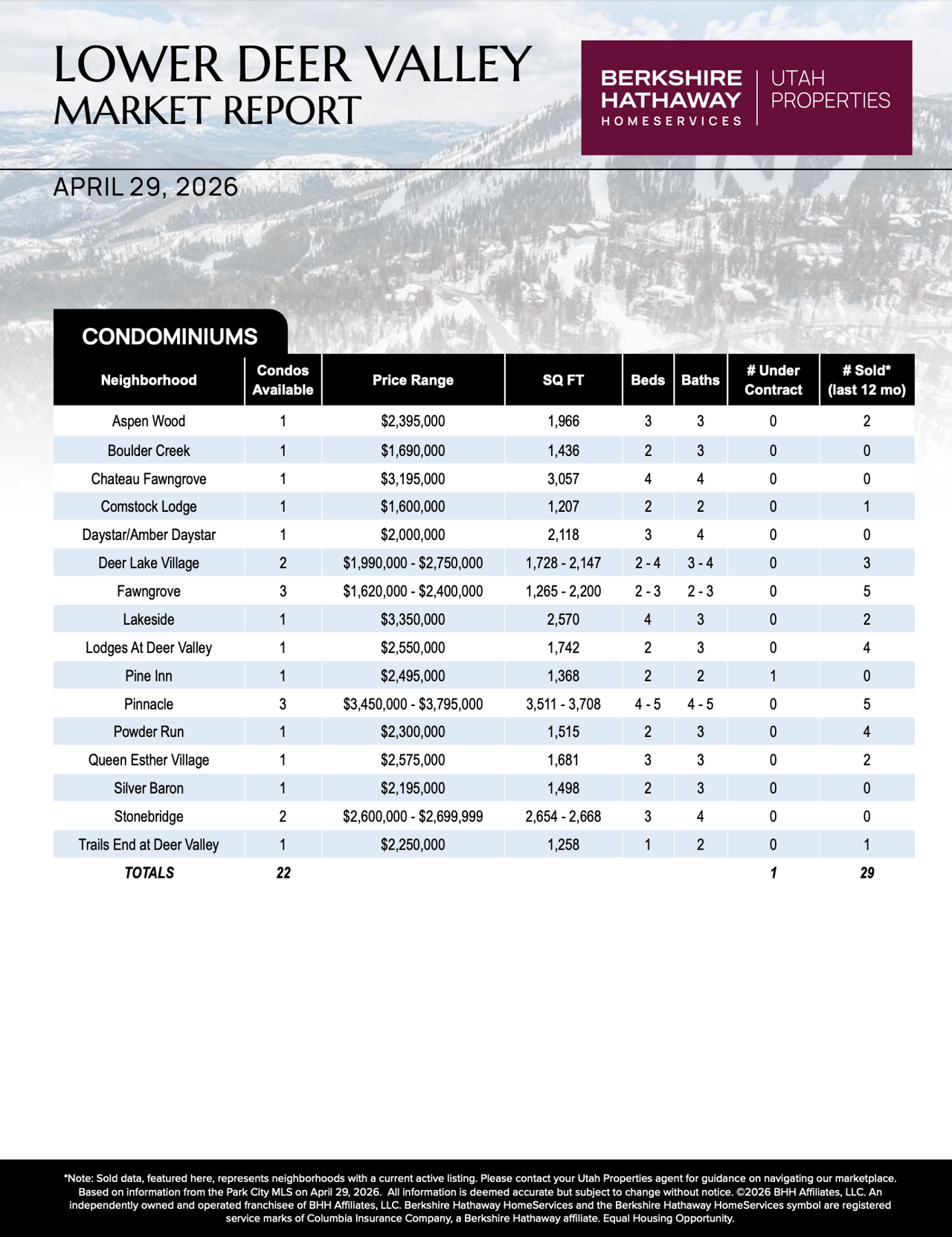
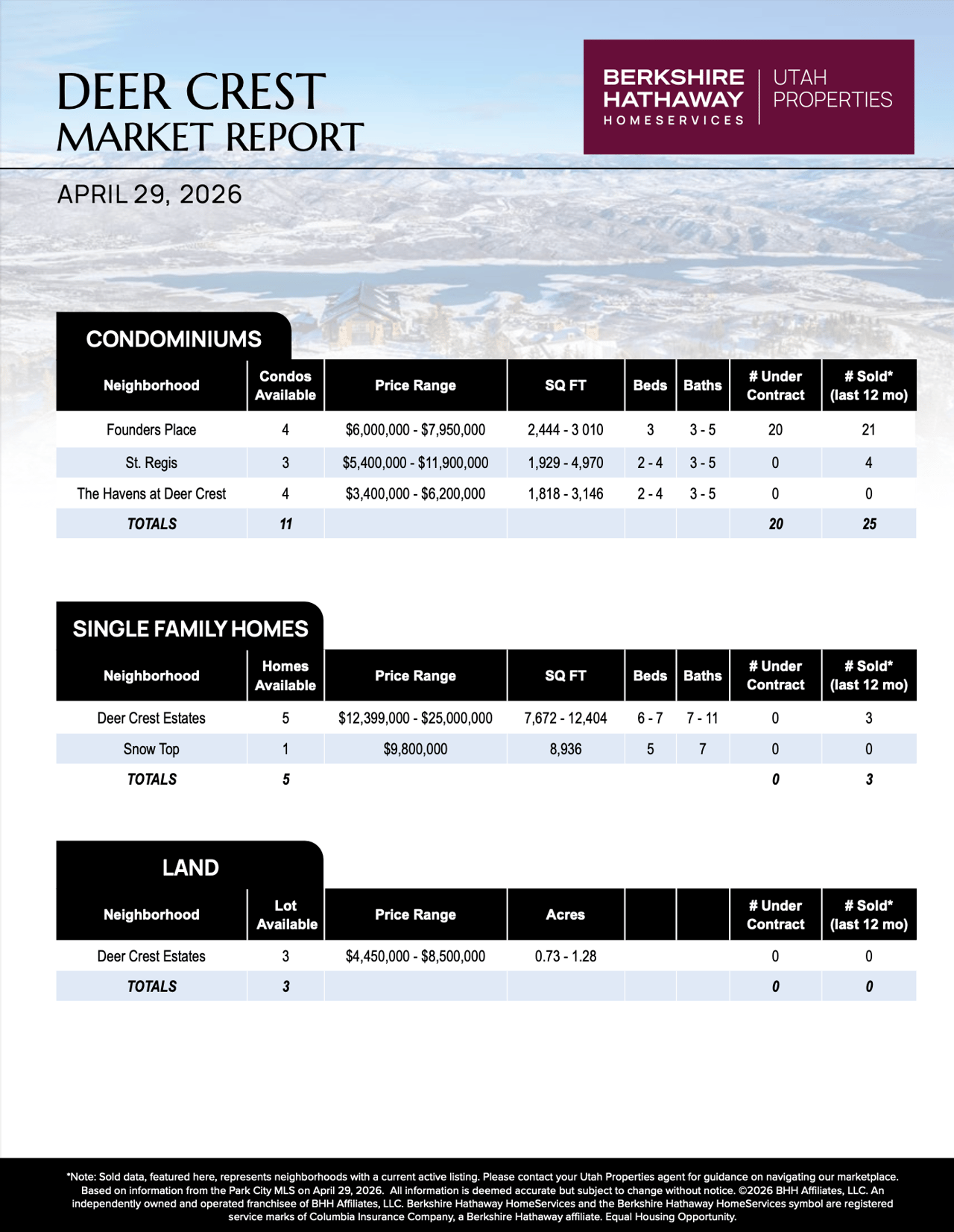
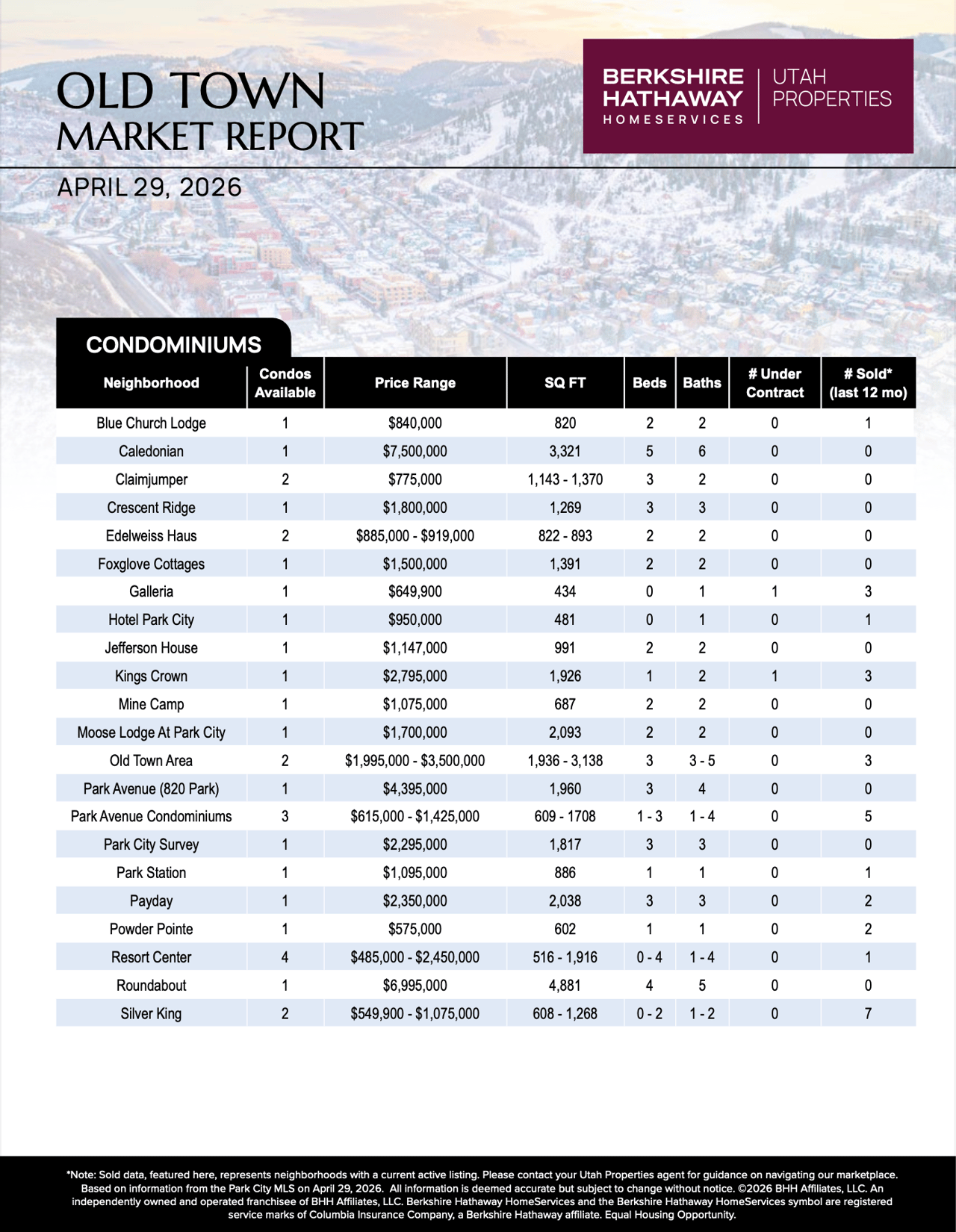
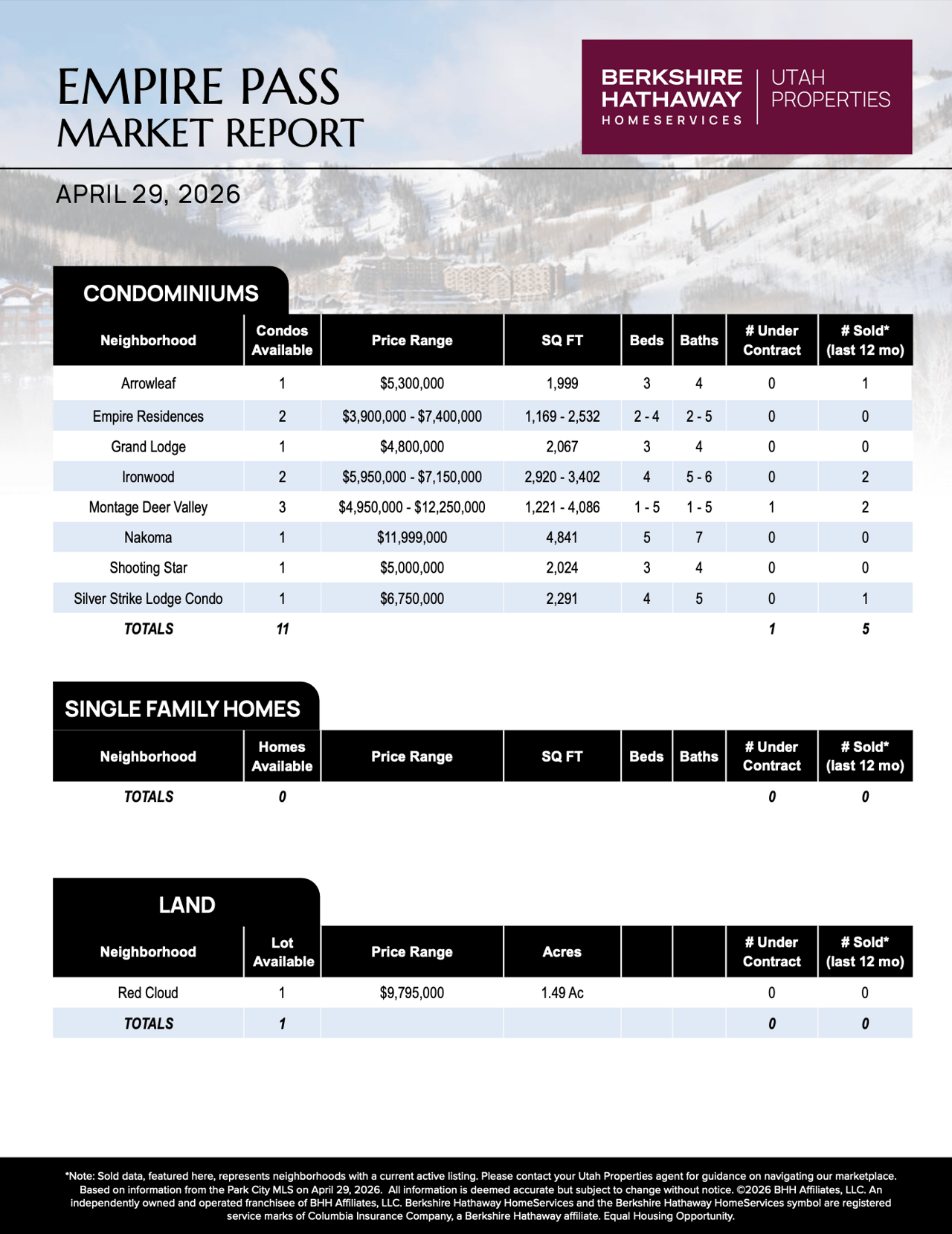
The latest Park City and Deer Valley real estate reports offer a helpful snapshot of where the market stands today. They show the numbers, but more importantly, they give us a chance to talk about what those numbers actually mean for buyers and sellers.
The Market Is More Selective
One of the clearest themes is that buyers are still active, but they are more thoughtful than they were during the overheated pandemic years.
That does not mean demand has disappeared. Far from it. Park City and Deer Valley continue to attract buyers looking for lifestyle, recreation, long-term value, and access to one of the best mountain communities in the country.
But today’s buyers are taking their time. They are comparing properties more carefully. They are paying attention to location, condition, rental potential, HOA costs, views, ski access, and overall value. Homes that are priced well and presented beautifully can still get strong attention. Homes that feel overpriced or tired are more likely to sit.
In my opinion, this is a healthier market. It rewards preparation, good pricing, and strong marketing.
Inventory Matters, But So Does Quality
Inventory is always one of the most important pieces of the Park City conversation. More listings can give buyers options, but not all inventory is equal.
A well-located Deer Valley property, a beautifully remodeled Old Town home, or a rare ski-access residence is not the same as a property that needs work or sits in a less convenient location. This is why broad market averages only go so far.
For sellers, this means the bar is higher. Presentation matters. Photography matters. Pricing strategy matters. The story around the property matters.
For buyers, it means there may be more room to negotiate in certain segments, but the best properties still require decisiveness.
Deer Valley Remains Its Own Market
Deer Valley continues to be one of the most watched luxury resort markets in the country, and for good reason. Between the resort experience, limited existing inventory, and ongoing expansion, interest remains strong.
That said, Deer Valley is not one single market. Lower Deer Valley, Deer Crest, Empire Pass, Silver Lake, and the newer East Village area all have different dynamics. Buyers should not assume that one trend applies equally across every neighborhood.
Some properties are driven by ski access. Others by views, privacy, architecture, rental flexibility, or proximity to restaurants and resort amenities. Understanding those differences is where the real value is.
Pricing Still Needs to Be Grounded
This is not a market where sellers should simply “test the waters” with an ambitious price and hope buyers show up. Buyers are informed. They have access to data. They are comparing every property against recent sales and current competition.
That does not mean sellers need to underprice. It means they need to price with intention.
The best strategy is not always the highest list price. The best strategy is the one that creates serious interest from qualified buyers and positions the property correctly from day one.
What Buyers Should Know
For buyers, this market offers opportunity, but patience and preparation are important. The best properties are still competitive, especially in prime areas. At the same time, there may be more flexibility than there was a few years ago, particularly for properties that have been on the market longer or need updates.
A smart buyer should look beyond the headline price and ask better questions:
Is the location truly strong?
How does the property compare with recent sales?
What is the long-term appeal?
Are there upcoming resort or neighborhood changes that could affect value?
Does the home fit how you will actually use it?
In Park City and Deer Valley, the best purchase is rarely just about price. It is about fit.
What Sellers Should Know
For sellers, the market is still very capable of producing excellent results, but the approach needs to be more refined.
The homes that stand out are the ones that feel easy to understand, easy to love, and easy to justify financially. Buyers need to see why a property is special. That requires more than putting it on the MLS and waiting.
Strong marketing, clean presentation, thoughtful staging, high-quality visuals, and a clear pricing strategy are essential.
The good news is that Park City and Deer Valley remain incredibly desirable. The less-good news is that buyers are not chasing everything. Sellers need to earn the attention.
The Big Picture
The latest reports reinforce what many of us are seeing on the ground: this is not a frozen market, and it is not a frenzy. It is a more balanced, more selective, and more thoughtful market.
That is not a bad thing.
Park City and Deer Valley continue to benefit from limited land, world-class recreation, strong lifestyle demand, and long-term appeal. The buyers are still here. The sellers who are realistic and prepared are still finding success. But the days of assuming every listing will sell quickly at any price are behind us.
For anyone considering buying or selling, the most important thing is to understand the specific segment of the market you are in. A condo in Canyons Village, a ski home in Empire Pass, a family home in Park Meadows, and a new development opportunity near Deer Valley East Village all require different analysis.
The reports are a great place to start. The real insight comes from knowing how to interpret them.