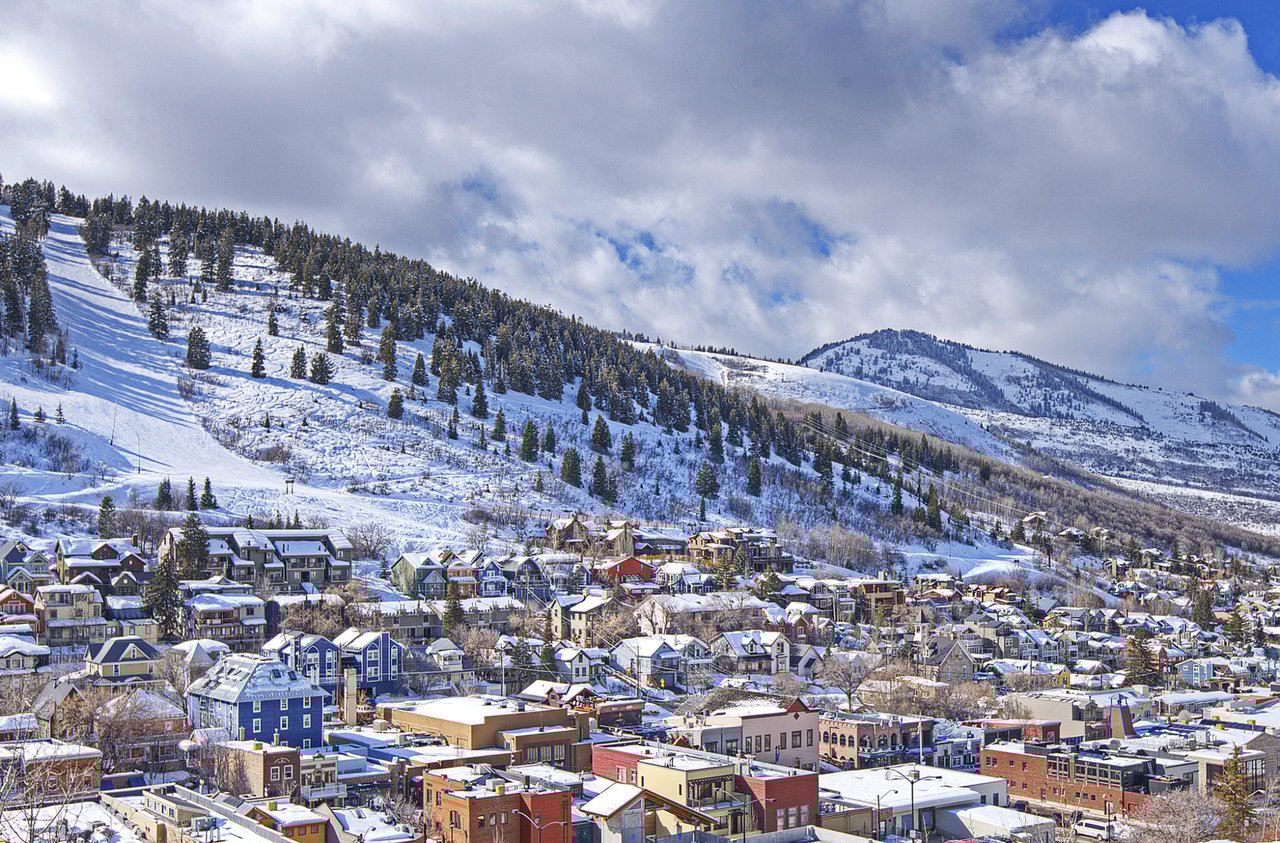
Why skiers are looking at Park City and Deer Valley right now (and why buyers are following)
Every ski town likes to tell a story about what makes it different: deeper powder, fewer crowds, better après, more “authentic” locals. Park City and Deer Valley don’t really bother with that. Their pitch is more pragmatic—and that’s exactly why they’re winning.
They’re easy to get to, hard to outgrow, and (increasingly) difficult to replace. Add a once-in-a-generation resort expansion on the east side of Deer Valley plus the runway lights of a coming Olympics, and you’ve got a mountain market that feels less like a fad and more like a long-term gravity point.
1) The “two-resort town” advantage is real
Most resort towns revolve around one mountain. Park City revolves around two very different experiences—minutes apart.
Park City Mountain is the big, energetic network: families, groups, long weeks, plenty of terrain to roam, and the convenience of being tied into the Epic ecosystem. Park City Mountain Resort
Deer Valley is the counterpoint: skier-only, famously groomed, service-forward, and tuned for people who like things to feel composed even on a powder day—plus its connection to the Ikon Pass puts it in the center of how a lot of destination skiers plan their winters now. Deer Valley Resort+1
That pairing matters. It lets a family with mixed abilities—and mixed preferences—buy one home base and keep everyone happy. It also gives second-home owners a place where guests can cycle through different “styles” of skiing without needing a second trip.
2) Deer Valley’s expansion is changing the map, not just the trail count
The big story isn’t that Deer Valley is adding terrain. It’s that Deer Valley is repositioning itself.
The resort’s own plan describes a phased opening beginning in the 2025/26 season, with nearly 100 new runs, 10 new lifts, and an East Village gondola—part of a vision that “more than doubles” the resort’s skiable terrain. Deer Valley | Expanded Excellence+1
Local reporting has outlined the scale in plain language: the first phase is expected to bring thousands of new acres, new lifts (including a 10-person gondola up toward Park Peak), and a new base area formally named Deer Valley East Village. The Salt Lake Tribune+1
For skiers, this changes what “a Deer Valley week” looks like. You’re not just lapping familiar pods from a classic base. You’re moving through a resort that is effectively building a second front door—one that opens onto a much larger footprint and a different flow of traffic.
For real estate, it’s even bigger: new terrain and a new base area typically reset value conversations. Buyers stop comparing a home only to what exists today and start pricing in what the destination will feel like five and ten winters from now—especially when the expansion is designed around a modern, purpose-built village.
3) The Olympics aren’t a “two-week event” here—they’re a decade-long tailwind
Utah’s Olympic story isn’t theoretical. The IOC officially elected Salt Lake City–Utah as host of the 2034 Olympic and Paralympic Winter Games on July 24, 2024. Olympics
That matters to Park City and Deer Valley for three reasons:
-
Infrastructure gets scrutiny—and upgrades. Olympic host regions don’t just sell tickets; they sell reliability: transportation, airports, roads, safety operations, and venue readiness.
-
Global visibility returns. The 2002 Games permanently raised Utah’s profile. A 2034 return reintroduces the Wasatch to a new generation of skiers and buyers who plan trips—and purchases—around places that feel “proven.”
-
Confidence becomes contagious. When a region lands the Games, it signals competence: the ability to execute under pressure, coordinate across agencies, and deliver on a global stage. That confidence bleeds into buyer psychology.
You can already see organizers building the long lead-up; for example, AP has reported on major philanthropic fundraising tied to 2034 planning and community initiatives. AP News
4) Park City’s real estate story is scarcity plus demand—not just hype
In mountain real estate, demand is the headline, but supply is the plot.
The Park City Board of REALTORS® has been blunt about scarcity in key neighborhoods. In its Q3 2025 stats, Park City proper posted a median price around $4 million, and Old Town showed very limited sales volume over the prior 12 months—an illustration of how tight prime inventory stays. Park City Realtors
That’s why Park City and Deer Valley keep attracting buyers who are less price-sensitive and more lifestyle-anchored. They’re not only buying a ski home; they’re buying a place that’s hard to replicate:
-
a world-class mountain town,
-
near a major airport corridor,
-
with year-round amenities,
-
and now with major new terrain and a fresh Olympic horizon.
In other words: even when the broader market cools, the best-positioned resort towns tend to stay liquid.
5) The lifestyle is “easy luxury,” not manufactured luxury
There’s a difference between a place that feels upscale because it’s expensive and a place that feels upscale because it works.
Park City’s town core is walkable and alive. Deer Valley leans into service and smooth logistics. And unlike some resort towns that empty out midweek or fall asleep in shoulder season, Park City has enough restaurants, events, and year-round recreation to keep it feeling like a real community—not a set.
This is where the buyer decision gets simple: they can actually use the home. A second home that sits empty because getting there is a hassle, or because the “scene” feels forced, eventually becomes a line item. Park City tends to become a habit.
6) The quiet reason skiers keep choosing it: flexibility
Park City and Deer Valley are no longer “one-trip” destinations. They’re becoming the hub for skiers who want optionality:
-
A quick long weekend that doesn’t require a full travel production.
-
A Christmas trip where one group wants ski school and another wants steeps.
-
A base for hosting clients, friends, or family without worrying the experience will fall apart if conditions shift.
-
A place where the home value story is linked to real, visible investments—new lifts, new terrain, and a global event on the calendar.
That combination—access + variety + investment + visibility—is why skiers are looking here more seriously than ever, and why buyers keep following them.