What's Actually Driving Park City Property Values Right Now — And Why It's Bigger Than Any Single Neighborhood
If you own property in Park City, or you're thinking about buying, you've probably heard some version of "the market's hot" without anyone telling you why. Here's why. It's not hype, and it's not any one listing. It's the single largest resort infrastructure buildout in ski industry history, happening right now, a few miles from wherever your front door is.
The Expansion, In Plain Terms
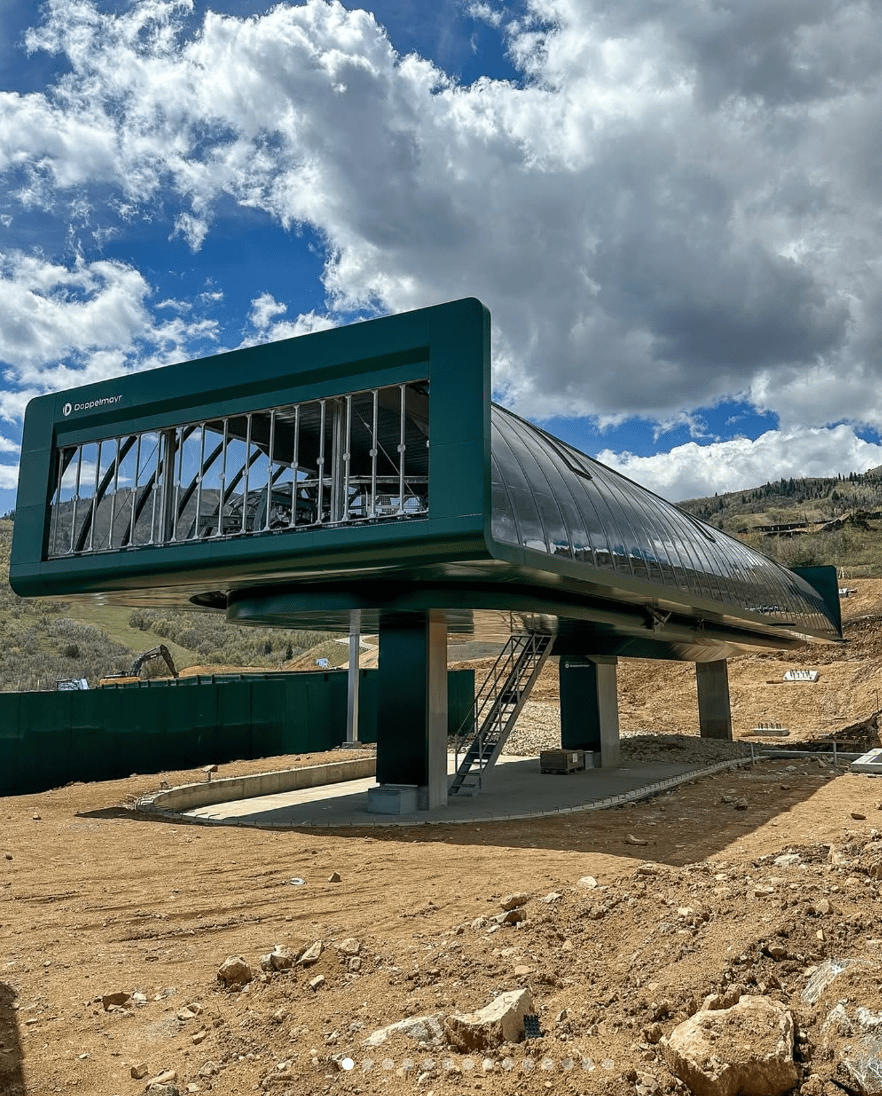
Since December 2024, Deer Valley Resort has been executing what it calls "Expanded Excellence" — a multi-year buildout that has already more than doubled the resort's skiable terrain. For the 2026/27 season, the headline addition is the new Hail Peak Express lift, opening roughly 200 new skiable acres and pushing the resort to about 4,500 skiable acres and 32 lifts total. That's not incremental growth. That's a resort that has fundamentally changed size and scope in under three years.
Alongside the terrain, the resort is investing in the guest experience infrastructure that supports long-term value: a new reservoir for snowmaking reliability, expanded base access, and continued buildout at Deer Valley East Village, including the 10-passenger East Village gondola and a new skier services facility with 1,200 day-skier parking spaces. A new Four Seasons Resort and Residences is under construction in East Village with a projected 2028 completion, following the Grand Hyatt Deer Valley, which opened in late 2024.
The dollar figures reported across sources vary — estimates for the full scope of public and private capital tied to the expansion and East Village development range widely into the billions, depending on what's included in the count. Rather than repeat a single number I can't fully verify, I will leave that alone for now.
Why This Matters Beyond East Village
Here's the part most coverage misses. This isn't a story about one neighborhood winning and another losing. Major resort infrastructure investment has historically lifted property values across an entire market — not just the immediate footprint of construction. New lift access changes traffic patterns and desirability for surrounding areas. New base infrastructure changes how buyers think about proximity and convenience. A snowmaking upgrade protects ski season reliability for the whole mountain, which protects value for every property that depends on that mountain being open and skiable.
That means Empire Pass, Old Town, Promontory, Tuhaye, and Blue Sky Ranch all sit inside the value impact of this expansion — some directly, some indirectly through overall demand for Park City as a destination. Buyers relocating from markets like the Bay Area and Los Angeles aren't evaluating one neighborhood in isolation. They're evaluating Park City as a whole, and a resort that's visibly, aggressively investing in its own future is a resort that signals long-term conviction to a buyer deciding where to put eight figures.
What This Means If You're Selling
If you own property anywhere in this market right now, the expansion is a tailwind, not a threat. The story to tell buyers isn't "my neighborhood is better than the new one." It's "this entire market is being invested in at a scale that hasn't happened in a generation, and here's how that protects and grows what you're buying." That's a stronger, more accurate pitch than any single-neighborhood comparison — and it's the one backed by what's actually happening on the mountain.
What This Means If You're Buying
Historically, early positioning ahead of a resort's infrastructure buildout has rewarded buyers in prior Deer Valley expansion phases. The current buildout is ongoing through at least the 2028/29 season, with East Village development continuing beyond that. Buyers evaluating property anywhere in Park City right now should be asking not just what a property is worth today, but how it connects to where resort access, terrain, and base infrastructure are headed over the next several years.
The Bottom Line
Park City's property values aren't moving because of any single listing or any single neighborhood's marketing. They're moving because the mountain itself is being rebuilt in real time, at a scale the ski industry hasn't seen before. Understanding that is the difference between reacting to the market and actually understanding it.
Though - do understand there are a few communities and neighborhoods that have not performed as well as others (some flat). These are typically non nightly rental locations in a second home area or access issues or no views. Ask me about it.
Have questions about how this expansion affects a specific property or neighborhood? Reach out — this is the kind of market intelligence I track daily.